Theory + Practice in Parallel: Forging World-Class Precision Printing Craftsmanship — KeyPadOne Holds Its 2026 Vocational Skill Level Certification Practical Exam
Assessing practitioners in screen printing, quality inspection, and die-cutting and assembly at three levels under the national occupational skill standards — through three assessment stations: a written theory exam, a QC practical and a printing practical. Key facts at a glance Different from the traditional single-practical certification method, KeyPadOne adopted a three-in-one assessment model of “written theory foundation + on-site practical skills + open comprehensive scoring.” This is both a deep implementation of the national skill talent evaluation system and an important window for the company to show customers in the high-end markets of Europe, the United States and Japan its hard strength in “standardized talent, standardized production and internationalized quality.” At two o’clock in the afternoon, the conference room of DONGGUAN ZHONGJIA PRINTING CO., LTD. (brand: KeyPadOne) welcomed the first group of candidates. The large screen at the front of the room displayed the words “2026 DONGGUAN ZHONGJIA PRINTING CO., LTD. (KeyPadOne) Vocational Skill Level Certification Practical Exam Scoring Site,” and the desk plates on both sides clearly marked the seats of the supervisors. All candidates took their seats in the standardized examination room, received their exam papers, admission tickets and answer sheets in a unified manner, and completed the theory test in a closed-book format with one person per desk. After the written exam, candidates rotated in groups to the quality inspection stations in the workshop and began the second stage of the assessment: the “quality inspection” practical. The banner reading “DONGGUAN ZHONGJIA PRINTING CO., LTD. (KeyPadOne) Skill Level Certification Practical Exam Site” hung high above the workshop, and supervisors scored on site with scoring sheets in hand. Candidates rotated among the CCD vision inspection area, the appearance inspection bench and the dimensional measurement bench, completing the judgment and recording of key items such as nameplate character clarity, membrane switch key travel and die-cut burr height. The final “printing practical” station was set up in KeyPadOne’s dust-free screen printing workshop. Wearing dust-free garments, caps and masks in a unified manner, candidates entered the constant-temperature, constant-humidity Class 100,000 cleanroom and independently completed the entire workflow on precision screen printing machines — from screen mounting and registration calibration, to ink mixing, trial printing, self-inspection, and delivery of the finished product. To ensure that the skill level certification is fair, impartial and open, KeyPadOne organized two core steps in the conference room: examination review and on-site scoring. The examination panel was jointly composed of the company’s Human Resources Department, Production Department and Quality Department together with externally hired assessors, who cross-reviewed each candidate’s theory paper, practical work and process records. After the counting was completed, the supervisors bound the answer sheets in order of examination number, stamped them with the special supervision seal, placed them into dedicated kraft paper sealed bags, and affixed the “Vocational Skill Level Certification Answer Sheet Sealing Strip.” Mastering theory design alone makes landing risks very likely to appear in the mass production stage; relying solely on trial and error in practice pushes up R&D and sampling costs. Therefore, a dual-track capability that places equal weight on theory and practice is a required foundation — not a bonus advantage — for KeyPadOne to take on high-end key panel projects. As a National High-Tech Enterprise and a Guangdong Specialized and Sophisticated SME, KeyPadOne specially invited a third-party assessment organization to supervise on site. On one hand, this implements the national vocational skill level certification norms; on the other hand, it has built a replicable and promotable dual-track talent standardization training model for the precision printing industry in the Guangdong-Hong Kong-Macao Greater Bay Area. From the closed-book written exam in the conference room, to quality inspection on the workshop floor, and then to screen printing practice in the cleanroom — KeyPadOne uses a “theory + practice” dual-track approach to break the words “precision printing” down into concrete actions that are quantifiable, assessable and traceable. In the future, DONGGUAN ZHONGJIA PRINTING CO., LTD. (brand: KeyPadOne) will continue to take “17 years of precision printing accumulation + an integrated industry-and-trade full-chain capability + a complete set of qualification certifications covering Europe and the United States” as its core competitiveness, and keep delivering stable, reliable and compliant precision printing solutions to brand customers worldwide in 3C electronics, home appliances, medical devices, industrial control, automotive and AI data centers.
1. Station One: The Written Exam — Laying the Firmest Theoretical Foundation

Three dimensions assessed in the written exam
2. Station Two: QC Practical — Enforcing the Strictest Factory-Exit Standards
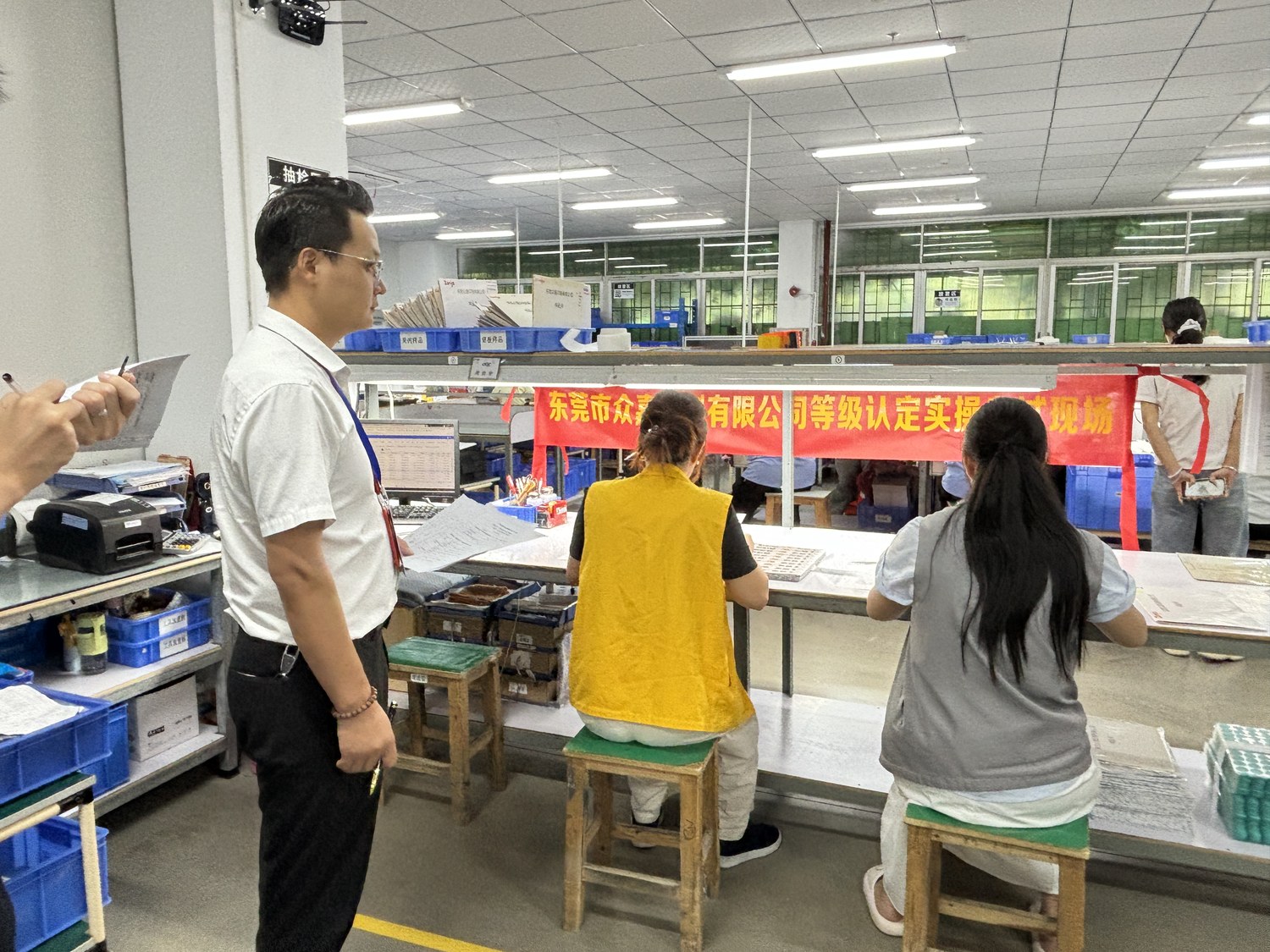
The three gates of the QC practical
3. Station Three: Printing Practical — Refining the Core Process to the Finest Level
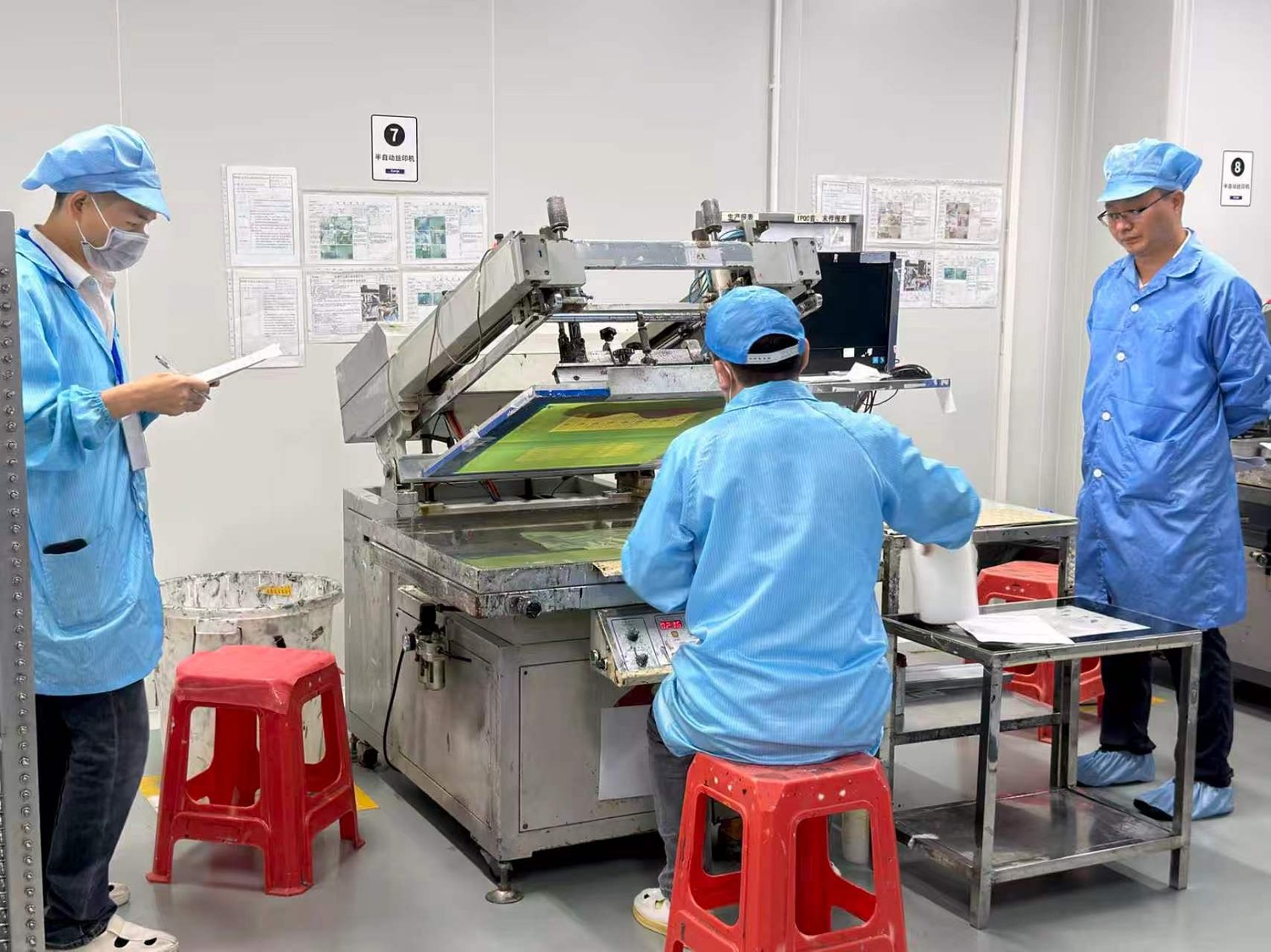
Four scoring elements of the printing practical
Scoring element What is assessed Registration accuracy Whether multicolor registration deviation is controlled within ±0.05 mm, which directly determines the clarity of nameplate characters and patterns. Ink layer uniformity Whether the thickness, uniformity and gloss of the screen-printed ink layer meet the product standard. Process discipline Whether key parameters such as squeegee angle, printing pressure and printing speed are strictly executed according to the SOP. Safety and 5S Standardized use of inks and solvents, waste liquid recovery, and compliant wearing of personal protective equipment. 4. Examination Review and On-Site Scoring: Combining Theory with Practice

5. Theory + Practice Dual Track: Why It Is a “Must” for KeyPadOne
6. Closing: Every Process Must Stand Up to the Review of International Customers