
Membrane Switch Dome Design Optimization Case Study
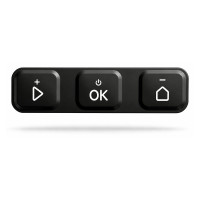
Dongguan Zhongjia Printing Co., Ltd. (brand: KeyPadOne) has many years of experience in the R&D and manufacturing of precision-printed products and specializes in custom industrial and electronic membrane switch panels. As a manufacturer focused on custom industrial membrane switch processing, we always put engineering reliability first. We do more than manufacture products: we proactively identify risks at the design stage and provide professional precision-printed HMI solutions. In the custom development of a membrane switch, every detail of the design directly affects long-term product reliability and user experience. The following is a real case we recently handled. The customer initially proposed a shared dome design for three keys. After a professional engineering assessment, we successfully guided the customer toward a more robust independent-dome solution, achieving improvements in both product performance and reliability.
1. Customer Requirement: One Shared Dome for Three Keys
The customer's initial concept was to use one shared dome for three keys—that is, three keys would share one large circular raised structure. From an appearance standpoint, this design offers a certain visual unity. But how feasible is it from an engineering perspective? This is exactly where a professional electronic membrane switch panel manufacturer must protect the customer's interests.
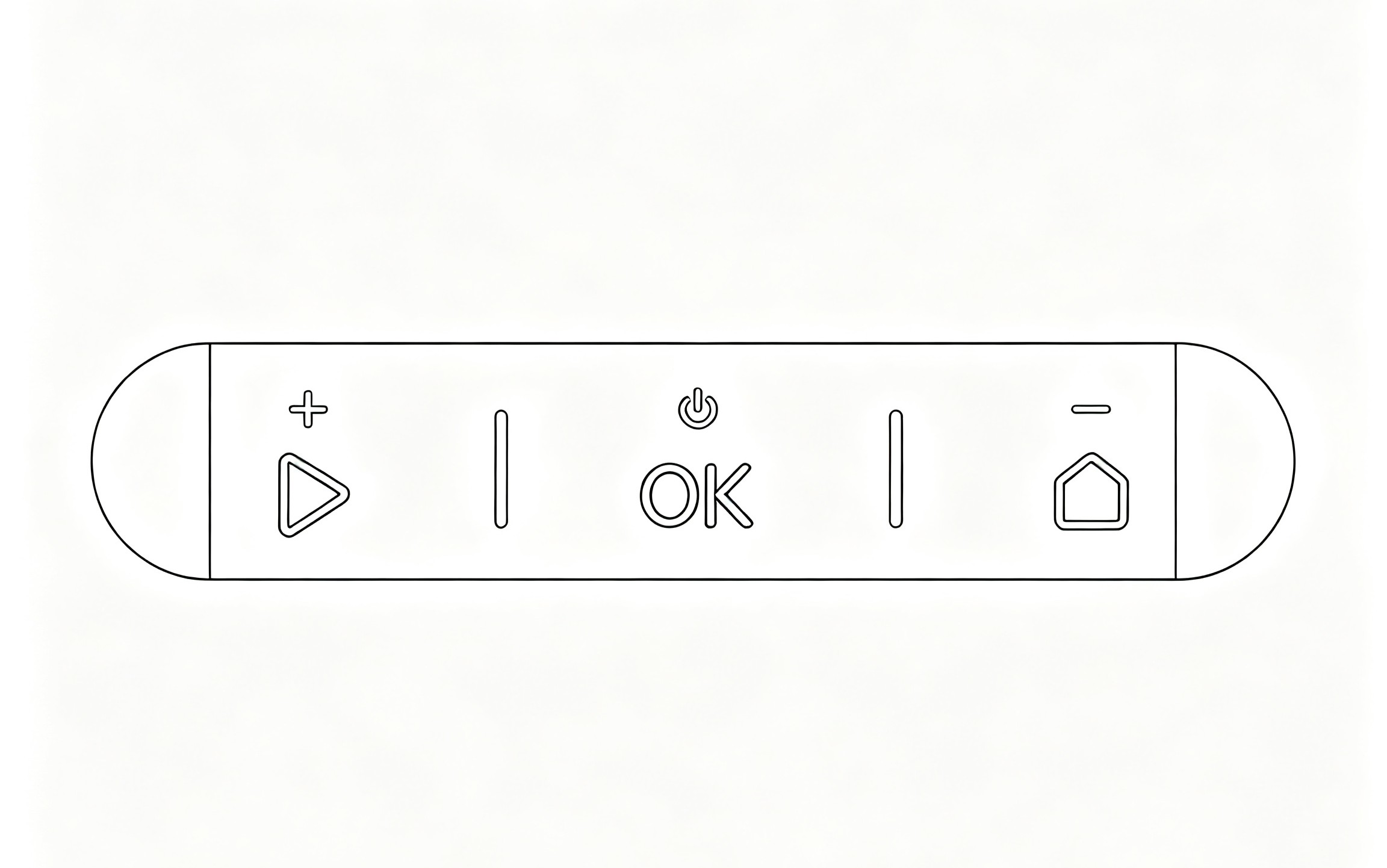
2. Engineering Assessment and Risk Analysis: Why the Shared Dome Was Not Feasible
After receiving the customer's design request, our engineering team immediately evaluated it from three perspectives: material mechanics, long-term durability, and manufacturing processes. As an IATF 16949-certified membrane switch supplier, we follow strict procedures and standards for product reliability verification. The analysis identified the following core risks:
① Insufficient support — the center area becomes the weak point
Once the three key domes are combined into one structure, the dome size increases significantly. For the PET or PC panel materials commonly used in membrane switches, the center of a large dome lacks effective support points. Over time, the combined effects of gravity and changes in ambient temperature can cause the center area to gradually sag, creating two serious problems:
- Appearance deformation: The dome surface is no longer flat. A visible depression can be seen from the side, seriously affecting the finished product's visual quality.
- Poor tactile feedback: A collapsed dome can shorten or unevenly change the key travel. Users may feel looseness or dead travel when pressing the key, which seriously affects the operating experience.
② Manufacturing risk — large domes are difficult to form
During membrane switch manufacturing, domes are formed by hot-pressing with a mold. The larger the dome, the higher the requirements for mold precision, pressure uniformity, and material elongation. A large shared dome is more likely to develop surface wrinkles, uneven thickness, and reduced elasticity during forming, directly lowering production yield. For customers, choosing an experienced custom PC/PET membrane switch panel manufacturer helps avoid these process pitfalls at the design stage and significantly reduces later trial-and-error costs.
To show the difference between the two solutions more clearly, the key dimensions are compared below:
| Comparison dimension | Shared-dome design | Independent-key dome design |
|---|---|---|
| Support structure | The center area lacks support and is prone to collapse. | Each key has independent support, providing a stable structure. |
| Long-term reliability | The center area sags after extended use, deforming the appearance. | Long service life with a consistently maintained appearance. |
| Tactile feedback | Inconsistent; the center and edge areas feel noticeably different. | Consistent and uniform; each key feels independent and clear. |
| Production controllability | Large-dome forming is difficult and yield is hard to guarantee. | Small independent domes use a mature process with high yield. |
3. Optimization: Advantages of the Independent-Dome Design
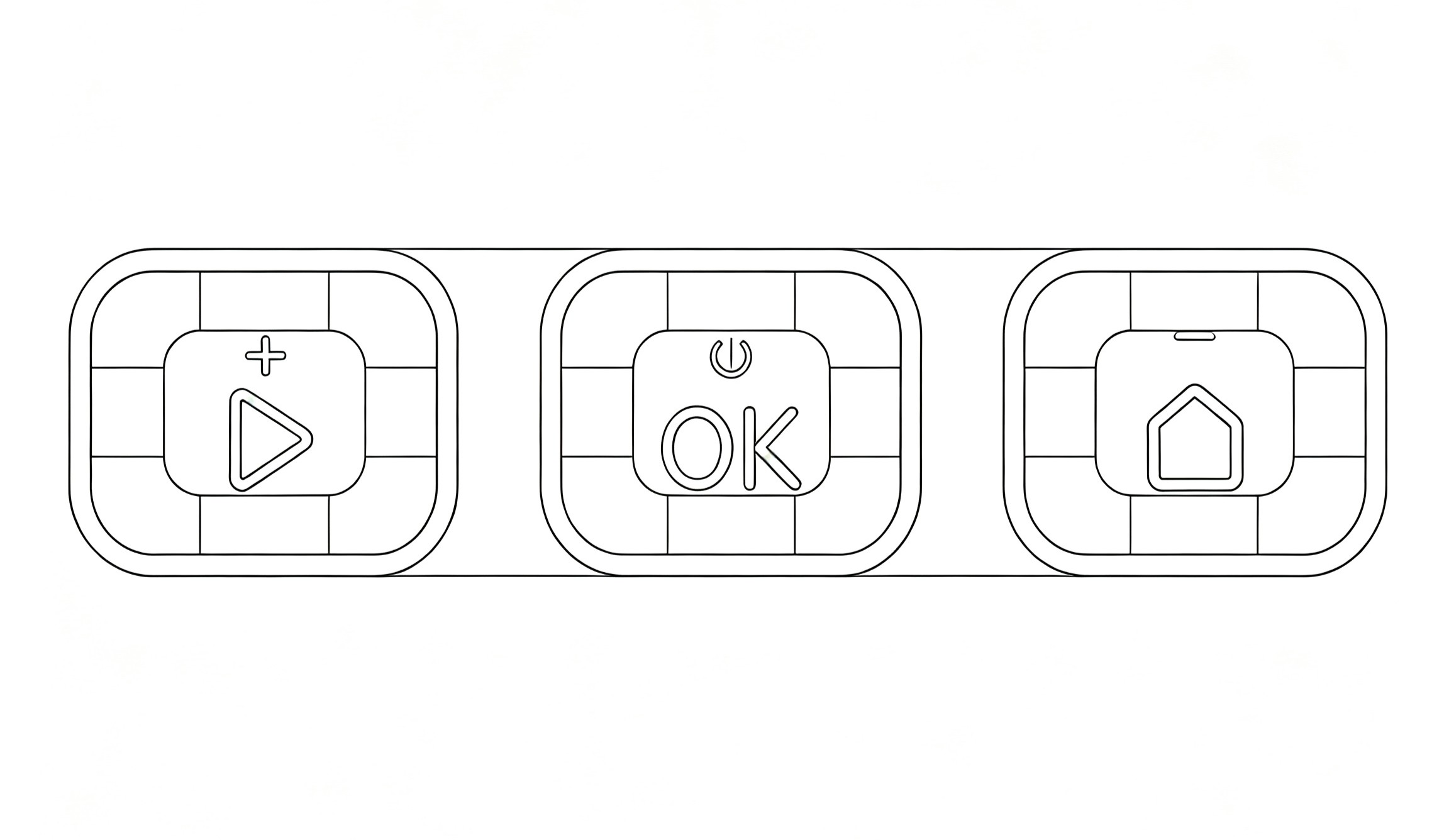
Based on the engineering analysis above, we recommended changing the design from one shared dome to one independent dome for each key. This adjustment brought the following significant advantages:
- Improved structural stability: Each key has its own independent support structure and is not pulled by deformation of adjacent keys. Each of the three independent domes bears its own load, eliminating the unsupported center area.
- Consistent tactile feedback: The travel, operating force, and return force of each independent dome can be controlled and adjusted separately, ensuring a consistent feel for every key. This is particularly important for high-end products.
- Mature manufacturing process: Small independent domes are one of the most mature process solutions in the membrane switch industry. Our extensive track record and stable yield data help reduce production risk effectively.
- Validated long-term reliability: The independent-dome solution has been verified in many real-world projects. It maintains stable shape and performance across a wide temperature range from -20°C to +85°C without collapse or deformation.
4. Sample Verification and Customer Approval
To help the customer understand the practical effect of the independent-dome solution, we presented similar independent-dome samples previously manufactured for other customers. Through direct comparison of appearance, tactile feel, and durability, the customer quickly recognized the clear advantages of the independent-dome design.
After thorough communication and sample verification, the customer agreed to change the design from one shared dome to one independent dome for each key. This decision not only resolved potential product-reliability issues but also laid a solid foundation for subsequent mass production. As a professional ODM/OEM custom manufacturer of membrane key panels, we always engage at the early project stage and provide full-process technical support, including DFM (Design for Manufacturing), material selection, and process optimization.
Are you looking for a reliable manufacturer?
We can quickly provide customers with market analysis, technical support and customized services.
- Full Name:
- Tina Chen
- Tel:
+86 18165688198
- Email:
- tina.chen@keypadone.com
- WhatsApp:
- 8618165688198
- Address:
- No. 1 Shunxing Street, Liangjia Village, Shijie Town, Dongguan City, Guangdong Province